Every year, millions of people apply for U.S. visas—whether for work, study, family visits, or permanent immigration. While many are approved, a significant number face rejection. A visa denial can feel discouraging, but understanding the most common reasons can help applicants avoid mistakes and improve their chances of success.
1. Incomplete or Incorrect Application
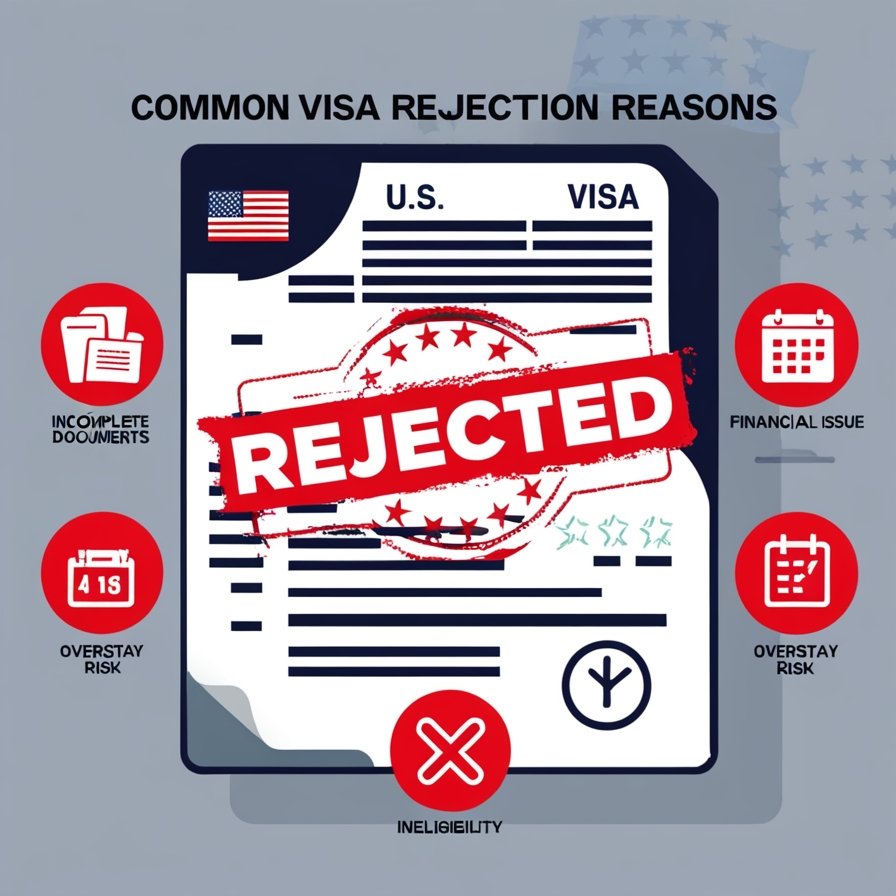
One of the biggest reasons for rejection is errors in the visa application. Missing documents, incorrect information, or incomplete forms can immediately raise red flags. The U.S. consular officer must see a clear, accurate, and complete record to make a decision.
2. Lack of Financial Proof
Applicants must prove that they have enough funds to support themselves during their stay in the U.S. Without strong evidence—such as bank statements, employment letters, or financial sponsors—a visa officer may doubt your ability to manage expenses and deny your visa.
3. Weak Ties to Home Country
Tourist and student visa applicants are often denied if they fail to show strong ties to their home country, such as family, employment, property, or other commitments. The U.S. immigration system wants to ensure applicants intend to return after their permitted stay.
4. Previous Immigration Violations
If you have overstayed a prior visa, entered the U.S. illegally, or worked without authorization, it will seriously affect your chances. Immigration officers carefully review past records, and even small violations can lead to rejection.
5. Security and Background Concerns
The U.S. conducts strict security checks. Criminal history, suspected fraud, or even inconsistencies during the interview can result in a denial. Applicants must be prepared to answer questions honestly and provide supporting documents when needed.
6. Inadequate Documentation
Supporting documents are critical. Missing admission letters, employer letters, or proof of relationship for family visas often leads to rejection. Officers need evidence to confirm the legitimacy of your reason for traveling.
7. Health-Related Issues
Certain medical conditions that pose a public health risk, or failure to provide vaccination records, may also result in a denial. Medical exams are part of the process for immigrant visas and some non-immigrant categories.
8. Misrepresentation or Fraud
Providing false documents or lying during the interview is one of the fastest ways to get permanently banned. Even small discrepancies can damage your credibility.
How to Improve Your Chances of Approval
- Double-check all application forms for accuracy.
- Prepare financial evidence to show you can afford your stay.
- Demonstrate strong ties to your home country if applying for temporary visas.
- Be completely honest during the interview.
- Seek professional guidance if your case is complex.
✅ Final Thoughts: While U.S. visa rejections can be frustrating, most denials are avoidable with proper preparation and documentation. By understanding the top reasons for rejection, you can take steps to strengthen your application and increase your chances of approval.