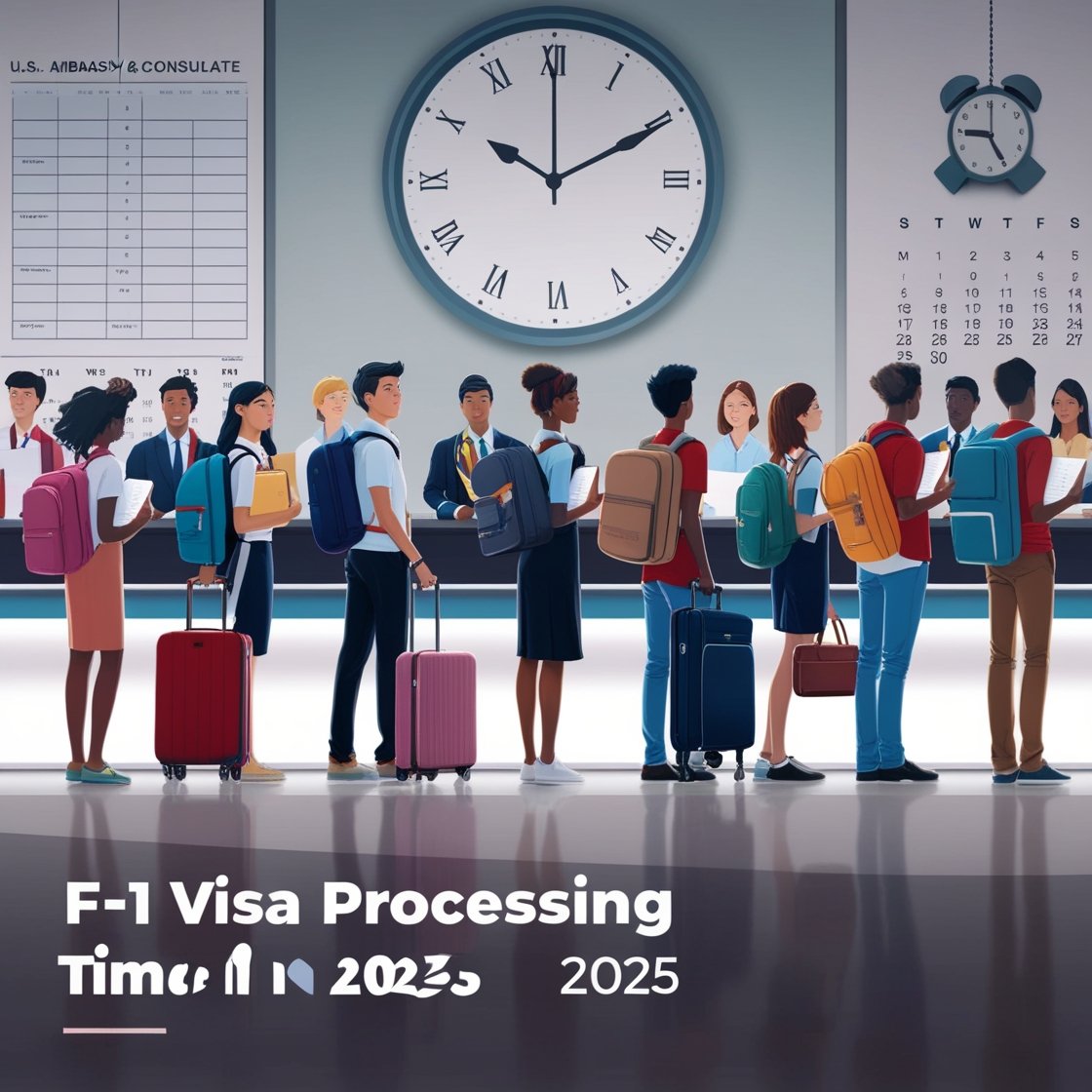
For international students planning to study in the United States in 2025, one of the most important questions is, “How long will it take to get my F-1 visa approved?” The F-1 student visa remains the most common pathway for students pursuing academic programs in U.S. universities, but the processing timeline can vary depending on the country, embassy workload, and seasonal demand. Understanding the steps involved, average wait times, and ways to avoid delays is essential to ensure you don’t miss your semester start date.
The F-1 visa process begins after you receive your Form I-20 from a U.S. university. Once you pay the SEVIS I-901 fee and submit the DS-160 form online, you can schedule a visa interview at your nearest U.S. embassy or consulate. In 2025, the average processing time for the F-1 visa ranges from a few weeks to several months, depending on location. In countries with high student traffic like India, Pakistan, China, or Nigeria, appointment wait times may stretch up to 90 days during peak seasons such as June to August. In contrast, smaller embassies with fewer applicants may process cases within two to four weeks.
After your interview, the actual visa decision is usually made quickly often within three to five working days. However, if your application goes into administrative processing, which is an additional review conducted by the embassy, this can delay approval for several weeks. Common reasons for administrative processing include incomplete documents, security checks, or discrepancies in your application. To avoid this, make sure all your forms are accurate, financial proof is clear, and you are well-prepared for the interview.
Students in 2025 should also be aware that U.S. visa policies are more technology-driven now. Many embassies use digital tools to track and streamline applications, but the overall waiting period still depends on how early you schedule your appointment. Experts recommend booking your interview as soon as you receive your I-20, ideally three to four months before your program start date. This gives you enough time to handle unexpected delays without risking your admission timeline.
Another important factor is the time of year you apply. Summer months often see the longest wait times since most U.S. universities begin in August and September. If possible, consider applying for spring or winter intakes where embassy queues are shorter. Many abroad education consultants also advise students to register early for interview slots, since last-minute scheduling often leads to disappointment.
While F-1 visa processing times may seem unpredictable, preparation is the key to reducing stress. Double-check your documents, practice interview questions, and stay updated on your embassy’s appointment wait times by visiting their official website. In 2025, with more international students applying than ever before, competition for interview slots is fierce, but those who plan ahead have a smoother journey.
In conclusion, the F-1 visa processing time in 2025 depends largely on where you apply, when you apply, and how complete your application is. On average, students should expect anywhere between one to three months from scheduling the interview to receiving the visa, though many cases are decided much faster. By planning early, preparing thoroughly, and avoiding mistakes, international students can ensure they arrive in the U.S. on time and ready to begin their academic journey. If studying in America is your dream this year, start early the sooner you begin, the better your chances of a stress-free visa approval.