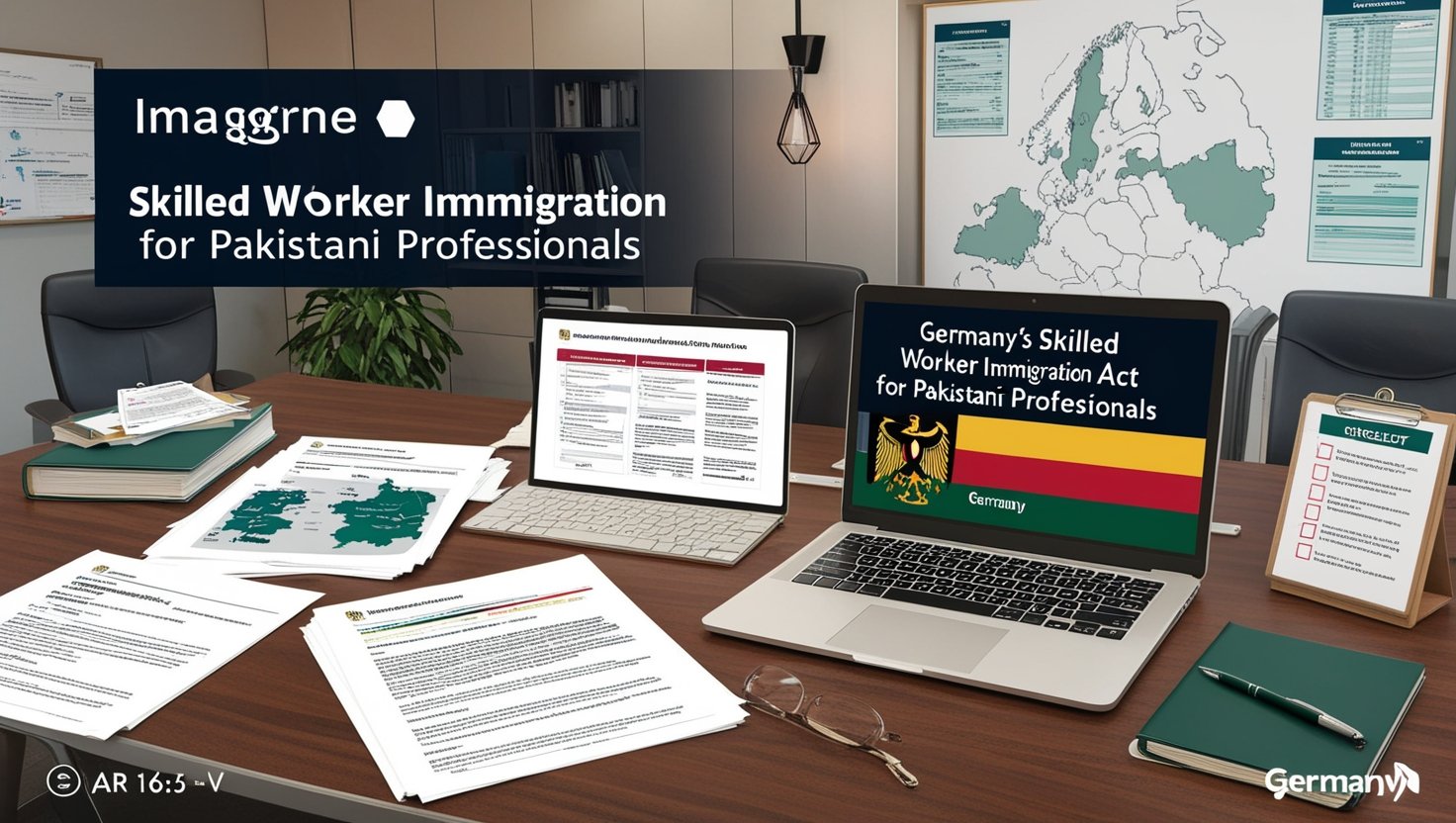
Germany’s economy is one of the strongest in Europe, and the demand for skilled workers continues to grow. For Pakistanis looking to move to Germany for better work opportunities, the Skilled Worker Immigration Act (Fachkräfteeinwanderungsgesetz) offers an accessible path. Introduced in March 2020, this law was designed to make it easier for non-EU nationals, including Pakistanis, to fill job vacancies in Germany by allowing them to enter and work in the country as skilled professionals. In this blog, we’ll walk you through everything you need to know about the Skilled Worker Immigration Act and how it can benefit Pakistani workers.
What is Germany’s Skilled Worker Immigration Act?
Germany’s Skilled Worker Immigration Act is a law aimed at attracting highly qualified workers from outside the European Union to help fill vacancies in the German labor market. This act expands the opportunities for non-EU nationals to apply for work visas in Germany, especially for those in skilled professions. It facilitates immigration for workers with vocational training, university degrees, and experience in sectors facing labor shortages in Germany, such as healthcare, IT, engineering, and trades.
The act is designed to reduce the skills gap in Germany, attract global talent, and make it easier for skilled workers to enter the country. This is an important step for Pakistanis, as it provides a streamlined and clear process for obtaining work visas in one of Europe’s largest job markets.
Eligibility Requirements for Pakistanis
To qualify under the Skilled Worker Immigration Act, Pakistanis must meet certain eligibility criteria. Below are the key requirements:
- Recognized Qualification or University Degree
One of the primary eligibility requirements is having a recognized vocational qualification or university degree. For university degrees, the qualification must be recognized in Germany or comparable to a German degree. For vocational training, Pakistanis should provide proof of completed training that meets German standards or submit an application to have their qualifications recognized. - Job Offer in Germany
The Skilled Worker Immigration Act requires you to have a job offer from a German employer. The job must be related to your qualifications, and the employer must be able to demonstrate that there is a shortage of skilled workers in that particular sector. The position should also meet the salary and contract requirements set by German law. - German Language Skills
While some jobs in Germany, especially in tech and scientific fields, may not require German proficiency, most workers are expected to have at least basic knowledge of the German language. Generally, a B1 or B2 level in German is required for most professions. However, there are exceptions, particularly for IT and other English-speaking roles. - Sufficient Financial Resources
You must also prove that you can support yourself financially while living and working in Germany. This can include evidence of a job offer with a sufficient salary, a bank statement, or a guarantee letter from your employer confirming that they will provide the necessary financial support. - Health Insurance
Having valid health insurance is another mandatory requirement. Germany has an excellent healthcare system, and every worker is required to have insurance, either through the public system or private insurance. - Age Requirement
While there is no strict age limit for applying under the Skilled Worker Immigration Act, candidates must typically be between 18 and 45 years old. Younger candidates with relevant qualifications and experience are more likely to be accepted, though exceptions may exist.
Application Process for the Skilled Worker Visa
The process of applying for a skilled worker visa under the Skilled Worker Immigration Act can be broken down into the following steps:
- Obtain a Job Offer
The first step is to secure a job offer from a German employer in a skilled field. You can search for jobs on various German job portals such as the Federal Employment Agency’s website or through recruitment agencies. Your potential employer should be willing to sponsor your application. - Verify Your Qualifications
Once you have a job offer, you will need to have your qualifications recognized in Germany. You can check if your degree or vocational training is recognized through the “Anabin” database or by contacting the Central Office for Foreign Education (ZAB). If necessary, you may need to apply for recognition through this process. - Submit Your Visa Application
Once you have a recognized qualification and a job offer, you can apply for a skilled worker visa at the German Embassy in Pakistan. You will need to submit the necessary documents, such as your passport, job contract, proof of qualifications, language skills, health insurance, and financial resources. - Attend the Visa Interview
After submitting your documents, you will be invited to attend a visa interview at the embassy. During the interview, embassy officials will review your qualifications and job offer and ensure that you meet all the requirements for a skilled worker visa. - Wait for Visa Approval
The processing time for the skilled worker visa can take anywhere from a few weeks to a few months. The embassy will notify you once your visa has been approved. Once approved, you will receive a temporary residence permit to work in Germany. - Relocate to Germany
Once you receive your visa, you can relocate to Germany and begin your new job. Upon arrival, you will need to register with the local authorities, such as the “Einwohnermeldeamt,” and apply for a residence permit that corresponds to your job status.
Opportunities for Pakistani Skilled Workers in Germany
The Skilled Worker Immigration Act offers a wide range of opportunities for Pakistani professionals, particularly in fields where Germany faces shortages. Some of the sectors with the highest demand for skilled workers include:
- Information Technology (IT):
Germany has a rapidly growing IT sector and is constantly seeking skilled professionals in software development, data analysis, network security, and IT management. Pakistanis with expertise in programming languages such as Python, Java, and C++ are highly sought after. - Healthcare:
The healthcare sector is another area where Germany faces a shortage of skilled workers. Nurses, doctors, and medical technicians from Pakistan can benefit from the Skilled Worker Immigration Act. Pakistanis with relevant medical qualifications are in high demand, especially in rural and underserved areas of Germany. - Engineering:
Engineers in various fields, including mechanical, civil, electrical, and automotive engineering, are highly sought after in Germany. Pakistani professionals with engineering degrees and experience have a good chance of securing employment under the Skilled Worker Immigration Act. - Skilled Trades:
Germany has a strong apprenticeship and vocational training system, and skilled tradespeople such as electricians, plumbers, carpenters, and metal workers are in demand. If you have vocational training in any of these fields, you may qualify for the skilled worker visa.
Benefits of the Skilled Worker Immigration Act
- Attractive Salary and Work Conditions:
Skilled workers in Germany enjoy competitive salaries, excellent working conditions, and strong worker protection laws. - Path to Permanent Residency:
After working in Germany for a certain number of years, skilled workers can apply for permanent residency, allowing them to live and work in Germany indefinitely. - Access to Germany’s Strong Economy:
Working in Germany provides access to one of the strongest economies in Europe, with opportunities for career advancement, professional development, and a high standard of living.
Conclusion
The Skilled Worker Immigration Act presents an excellent opportunity for Pakistani professionals looking to build their careers in Germany. Whether you’re in IT, engineering, healthcare, or a skilled trade, this act provides a clear and streamlined process for moving to Germany as a skilled worker. By meeting the eligibility requirements and following the application process carefully, Pakistani workers can enjoy the benefits of working in Germany’s robust job market.